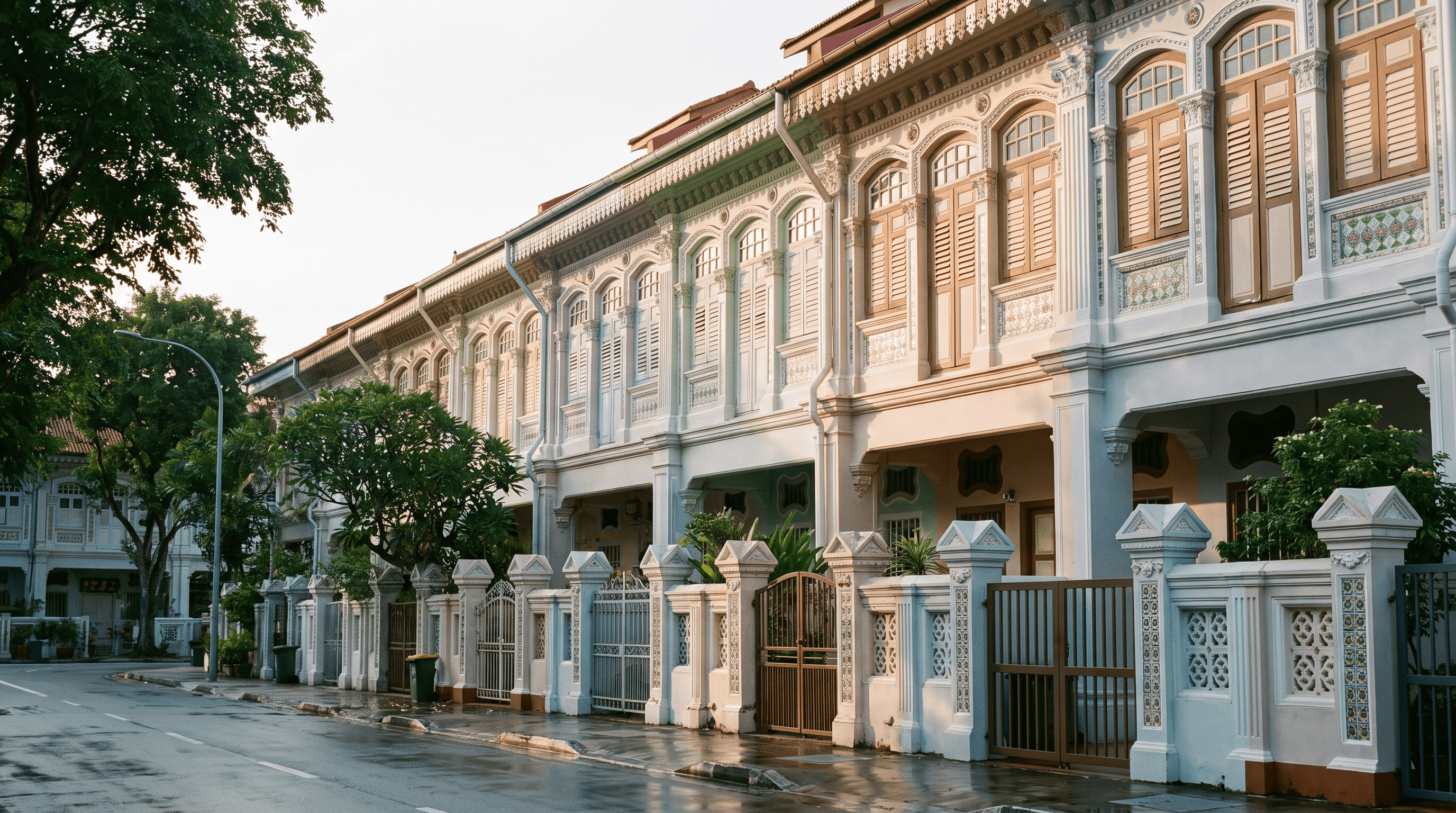
URA has put an entire pocket of 1927 Little India on the market in one shot, 18 two-storey conserved buildings sitting on a single 0.34-hectare plot. You can't bid on one of these the way you'd ballot for a flat, but the sale is a loud signal about where one of Singapore's most central districts is heading.
District PSF Comparison
Where District 8, home to Little India, sits against other districts in haio's market data
Published by haio Research on haio.sg — Singapore property analysis built on official URA, HDB and data.gov.sg records.
Read this article with its live charts at https://haio.sg/news/a-whole-1927-streetscape-in-little-india-is-up-for-grabs-and-it-tells-you-where/
URA wants Little India to be somewhere people live, not just visit
The site runs between Chitty Road and Veerasamy Road, inside the Little India Historic District. The buildings, two parallel rows of terrace houses linked by a back lane, went up in 1927 as municipal quarters for government employees. URA wants whoever wins the tender to sensitively restore them and adapt them for residential or long-stay serviced apartment use, in line with its conservation guidelines. Structural reports are being shared with bidders so they know what restoration and strengthening work is involved. The tender closes at noon on 28 July 2026.
Where
What
Built
Site area
Intended use
Tender closes
Chitty Road & Veerasamy Road, Little India Historic District
18 two-storey conserved pre-war buildings (two rows of terraces)
1927
0.34 hectares
Residential or long-stay serviced apartments
12 noon, 28 July 2026
Note what's not in there: a unit count, a price, or a tenure. URA hasn't published how many homes this becomes, so neither will we.
What this actually means for you
Be honest about who this touches. The cluster will go to a single developer or operator, not to individual buyers, so this is not a launch you'll queue for. Where it matters is second-order, and it cuts two ways.
If you already own or are eyeing a home in Little India or the wider District 8, this is part of a pattern. URA is openly trying to turn the precinct into a "lively mixed-use" district where people live, work and play, and converting heritage shells into homes and serviced apartments is how that intent could show up on the ground. More residential life in a precinct can, over time, lift its everyday liveability and the case for living there. It's a "could", not a "will", but it's the direction of travel.
If you're drawn to character or conservation property, this is a reminder that central, older buildings play by their own rules. Heritage charm and a postcode this central are real value drivers; age, restoration cost and tenure are real risks. The question that decides whether a place like this is a smart buy is the same one haio keeps coming back to: in a district like this, what really moves your long-run return?
The evidence: in central districts, tenure can quietly decide your return
That last question isn't rhetorical, haio's data has a view on it. For a district like 8, how a property holds value over time isn't just about the address; the lease terms attached to it can pull returns in noticeably different directions. Anyone weighing an older or central home here should look at that gap before they fall for the facade.
Freehold vs Leasehold Returns
Annualised returns in District 8, freehold/999-year versus 99-year leasehold
haio's take
This is a small, slow-burn sale, 18 buildings, not a megaproject, but it's a clear tell. URA is betting that Little India's future is residential as much as cultural, and precincts tend to re-rate quietly long before the headlines catch up. If District 8 has been a blind spot for you, that's exactly when it's worth a closer look, not after the restoration scaffolding comes down.
See how District 8 stacks up against the rest of the market before the precinct's transformation gets priced in.
Estimate only, not financial advice. A model-generated guide from public data, not a formal valuation; actual prices and bank valuations may differ, so verify before acting. haio accepts no liability for decisions made in reliance on it.
 haio
haio